




A slow site can cost you users and revenue. A 2023 Google study found that 53% of mobile visits are abandoned if pages take longer than three seconds to load. If you’re evaluating managed Drupal hosting services, you’re on track to cut load times and maintain uptime. When experts handle your infrastructure, you can focus on content and digital experiences that matter most.
With a managed hosting plan for Drupal, you’ll see faster performance and fewer maintenance headaches.
Benefits of managed hosting
When you choose a managed hosting plan for Drupal, you get more than server space. You tap into specialized tools that speed delivery, bolster security, and streamline updates. Key benefits include:
- Improved performance with built-in caching, CDN integration, and server tuning
- Enhanced security services such as web application firewalls, DDoS protection, and continuous monitoring
- Automated updates for Drupal core and modules, reducing the risk of vulnerabilities
- 24×7 expert support from teams that know Drupal’s architecture inside out
- Scalability that adjusts resources on demand to handle traffic spikes without downtime
Good news, many of these features come standard with top plans.
Evaluate essential features
When you vet managed providers, look for these essentials:
- Performance optimization: server-level caching, Redis or Varnish support, auto-scaling
- Advanced security: intrusion detection (IDS), regular malware scans, SSL certificate management
- Maintenance and updates: one-click Drupal upgrades, module patching, database backups
- Expert support: SLAs with guaranteed response times, Drupal-certified engineers
- Analytics and monitoring: real-time dashboards, uptime alerts, log access
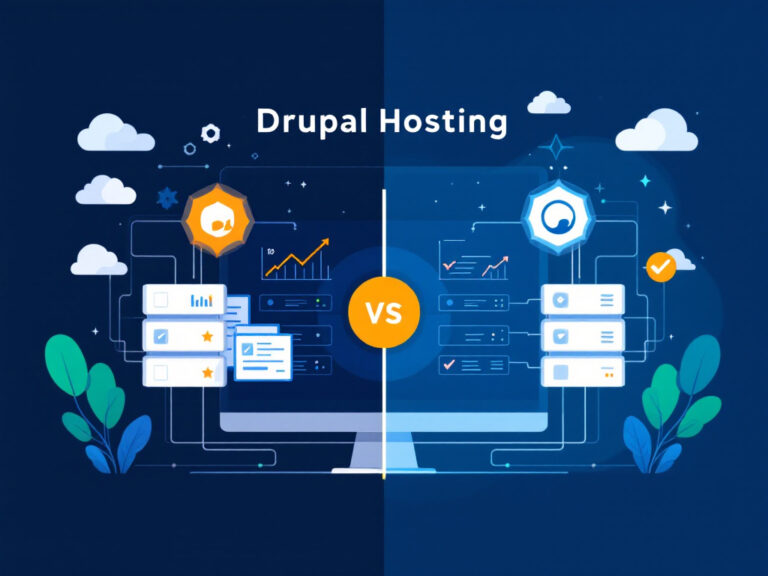
For a side-by-side look at these offerings, check our drupal hosting comparison. If budget is a priority, see our affordable drupal hosting solutions.
Plan your migration
If you’re ready to switch, a clear plan keeps risk low. Follow these steps:
- Audit your current site: note modules, custom code, and traffic patterns
- Select a provider: browse our drupal hosting providers to find the right fit
- Set up a staging environment: test performance, updates, and backups before you switch
- Schedule the cutover: choose off-peak hours and coordinate with your team
- Go live and monitor: track metrics closely after launch and adjust resources as needed
Measure site performance
After migration, you’ll want to validate gains. Focus on these metrics:
- Page load time: time to first byte (TTFB) and full render
- Uptime percentage: aim for 99.9% or higher
- Error rate: track HTTP 5xx and 4xx responses
- Resource utilization: monitor CPU, memory, and database performance
Use tools such as Lighthouse, New Relic, or Pingdom to get detailed insights. Over time, compare reports to see trends and spot issues early.
Recap and next step
- Leverage managed hosting benefits: performance, security, automated updates
- Evaluate essential features to match your enterprise requirements
- Plan a staged migration with testing and monitoring
- Track key metrics to confirm performance gains
When you’re ready to begin, explore our top drupal hosting companies to find a managed plan designed for your Drupal site. You’ve got this.